Tables: The Make or Break
By: Vincent Wu
Think back to high school cafeterias. Long lines of benches. Benches for 4 people are commonly filled with 6 people and become cramped. It doesn’t feel great sitting there right?
Back then though we didn’t really care, because all we wanted was to sit next to our friends, and if we were on the other size of the bench, where there was a small divide, even if it was more comfy, we were willing to sacrifice that comfort to feel closer to our friends.
That changes if we are sitting with strangers though. There’s space that we want to keep away from people we don’t know.
Hold onto that idea, because that same idea translates over as we grow up too.
When we are at a restaurant, we want to be close to our friends but far from strangers. If we could have it, we would want to have our own space away from strangers but also enjoy the service and the food.
Unless we are rich enough to have our own butlers, maids, and private chefs, this isn’t really an option so we’ll settle for restaurants instead.
For the restaurant though, they want to throw in as many seats as possible, because the more seats the more people they can serve. At higher end restaurants, there's a shift in their priorities though. That shift is what makes the table size and spacing skyrocket in importance. This is because people are now paying for more than just the food, but the experience too.
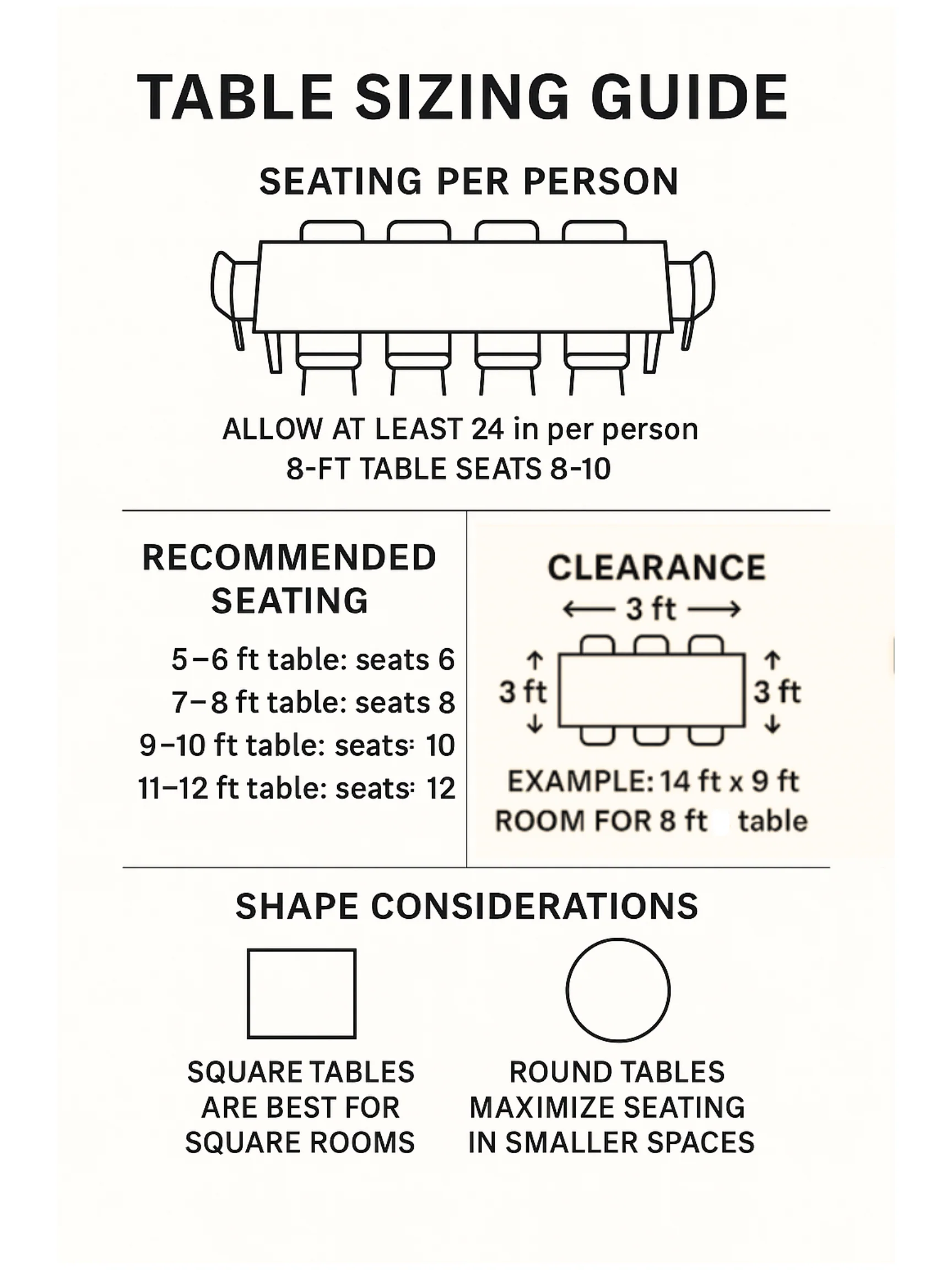
Let's start with the table size. At most fine dining restaurants, table dimensions are roughly 24-30 inches by 36 inches, which creates a space that most people are comfortable talking in.
This follows the idea of how people have comfort zones in which they allow people to step into depending on how comfortable the said person is with the others, this area of study is called proxemics. While this can vary person to person, there’s a good rule of thumb to follow.
According to Edward T. Hall, an anthropologist who pioneered this ideology, mentions how 1.5-4 feet is considered personal space, which is exactly where the table size sits.
A thought experiment you can have here would be this: How close would you need to be with someone to sit across from them on a normal table? It’s probably someone who is at least your friend, or someone you know either in a professional or social setting.
Restaurants know this, and can either adjust to it or ignore it depending on their goal, whether it's to curate a specific vibe or just to fill up tables and seats. If you go to any places trying to curate an intimate environment though, you’ll find tables to fit that 24-30 inches by 36 inches table guideline.
So we know the size of the table is important, but how important are the spacing of the tables themselves though?
Equally as important.
Thinking back to COVID, sitting in isolation, at least personally, was painful. Even if I couldn’t sit right next to people I don’t know, it's the sound of people that I missed. I missed being at a cafe and working, minding my own business, but still being able to hear others going around. There’s a clear difference between that and working in silence.
I say this, but I also don’t want to be THAT close to people, to where I can hear everything they’re saying. It’s uncomfortable, distracting, and possibly annoying too, especially if you’re trying to have your own conversation too.
That's the effect table spaces have.
The goal is to have it such that the tables are close enough to where you can hear others speaking, feeling comfortable knowing there are other people in the space, but far enough where you can’t hear what they’re talking about and they can’t hear what you’re saying too.
It’s like your own space that only a select few can walk into, while also feeling the warmth of others being in the space too.
Related Post
More stories to explore.
Stay Updated
Smart ideas for the creators of tomorrow
No spam, unsubscribe anytime.
